

Ukrainian nurses graduate from first-ever ICN leadership programme delivered in active warzone

The International Council of Nurses (ICN) today marked a major milestone in nursing leadership education and humanitarian support, celebrating the first cohort to complete the Nursing Leadership for Crisis Response and Recovery (NLCRR) programme in Ukraine. The closing ceremony was a testament to the extraordinary resilience and capability of the 23 Ukrainian nurse leaders who completed the programme, the first that ICN has delivered in an active conflict zone.
The 6-month programme encompassed specialized training in leadership for emergency response, crisis management, evidence-based decision-making, interdisciplinary collaboration, and sustainable recovery planning that will enable these nurse leaders to transform healthcare delivery during and after conflict. The programme has already delivered concrete impacts across Ukraine's healthcare system. Participants are working on projects to strengthen inter-regional nursing networks, implement mobile staffing algorithms for effective human resources distribution, and lead tuberculosis nursing education, all in the uncertain conditions of conflict.
The NLCRR initiative is fully funded by ICN’s #NursesforPeace campaign, with generous support from nurses and national nursing associations worldwide who contributed to the #NursesforPeace fund. NLCRR forms part of the ICN Leadership Centre, a hub for its diverse leadership development programmes. The programme was delivered in partnership with the Ukrainian Ministry of Health and World Health Organization (WHO) Regional Office for Europe.
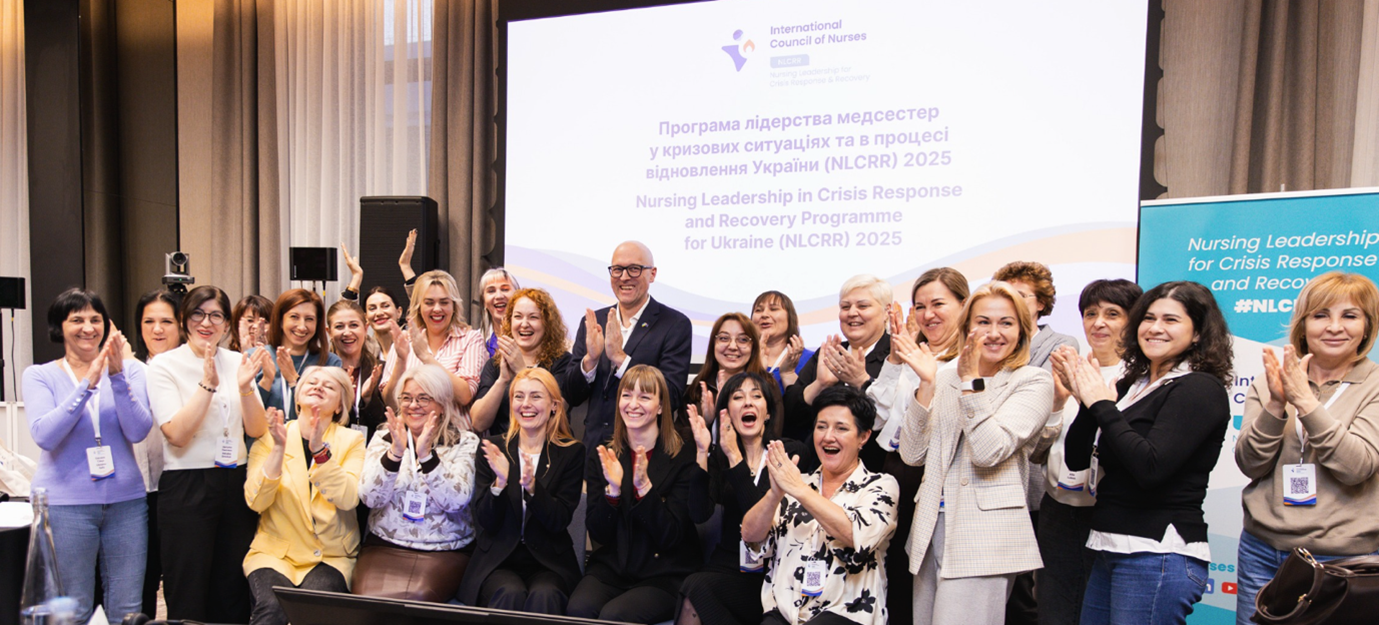
Closing ceremony recognized resilience and leadership
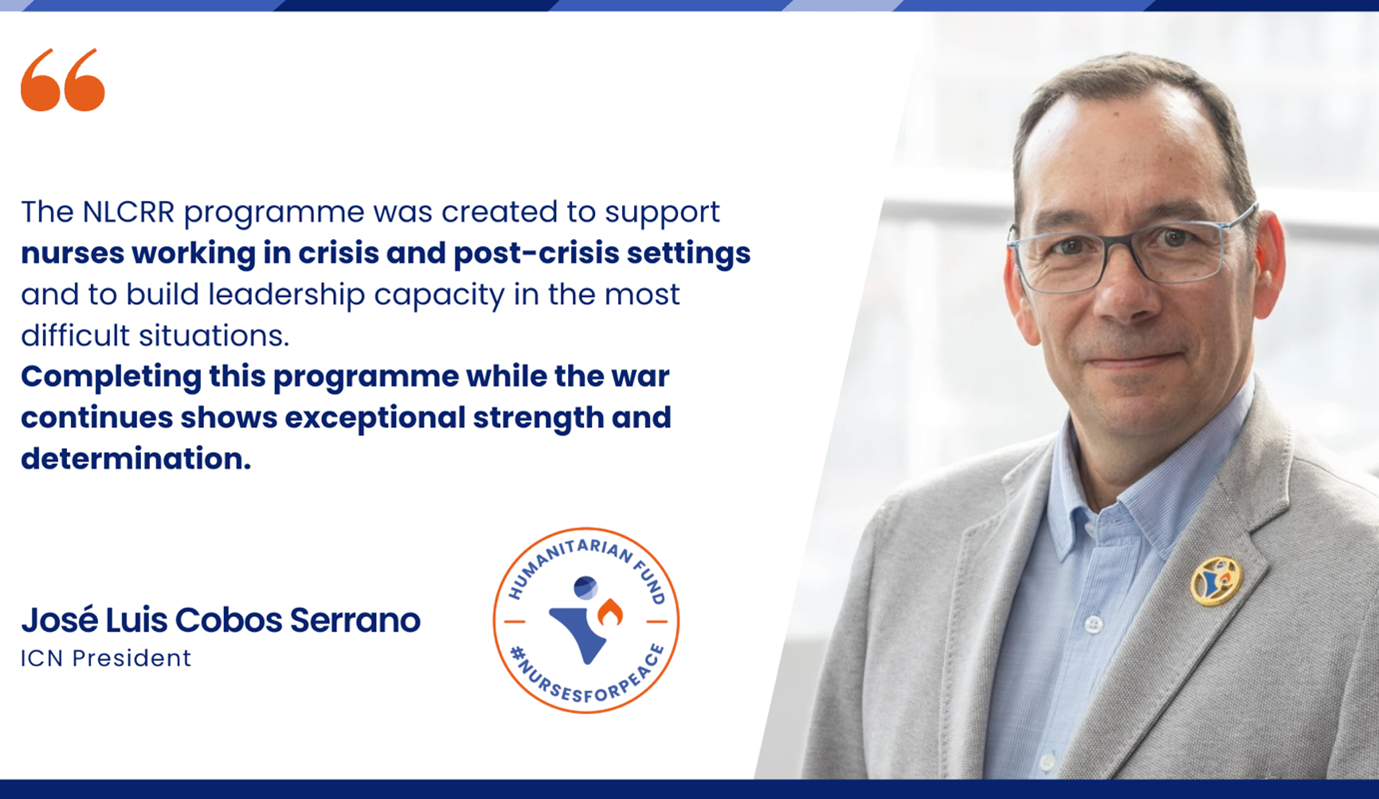
ICN President Dr José Luis Cobos Serrano opened the closing graduation ceremony by congratulating the cohort and acknowledging their remarkable commitment to the leadership and professional development that will help to strengthen and repair Ukraine’s health systems.
He said:
“The NLCRR programme was created to support nurses working in crisis and post-crisis settings and to build leadership capacity in the most difficult situations. Completing this programme while the war continues shows exceptional strength and determination.
Nurses are central to solutions and to strong health systems. Nurses are essential to recovery. And nurses must be part of policy decisions at every level. That is why ICN is committed to strengthening nursing leadership, ensuring that nurses have the skills, confidence, and support to influence change, protect working conditions, and build sustainable health systems for the future.”
Dr Andrew Scanlon, ICN Senior Education Consultant who led the training delivery, then discussed the rigorous curriculum the participants completed. This included structured online and in-person training strengthening emergency and crisis response leadership, professional ethics, governance, communication, and evidence-based decision-making in complex and uncertain environments.
He highlighted the cohort’s dedication, talent and courage, reflecting:
"Throughout this journey, these nurse leaders engaged deeply in complex leadership challenges. They analyzed, questioned, refined, and applied their learning to their own professional contexts and moved from reflection to action. They continued this work all while carrying on with their personal lives and professional responsibilities despite frequent air raids, threat of attack, and prolonged power outages."
Participants’ reflections on their leadership journey
Four of the new NLCRR graduates, representing different regions of Ukraine reflected on their experiences and the projects they worked on to support nursing and healthcare delivery.
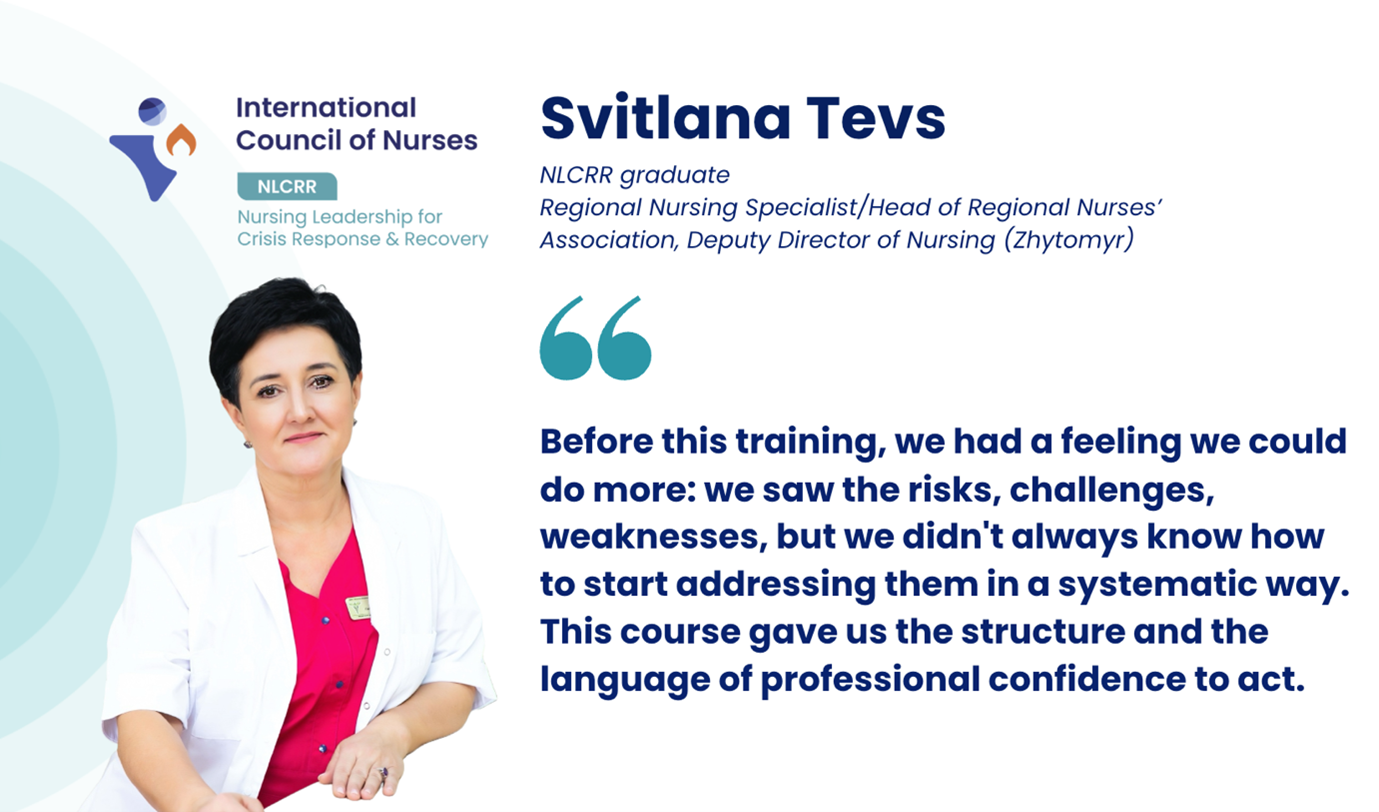
Svitlana Tevs, Regional Nursing Specialist within the regional and city health department, Head of the Regional Nurses’ Association, and Deputy Director of Nursing, from Zhytomyr, spoke as the Central Ukraine regional representative for the programme. She described the challenges of leading healthcare teams during wartime, the transformative impact of the programme, and participants’ work to establish a sustainable nursing body in the country.
“Working during conditions of war, turbulence, systemic, human and emotional disturbances, very often a nurse is the pivotal person in health care systems. Before this training, we had a feeling we could do more: we saw the risks, challenges, weaknesses, but we didn't always know how to start addressing them in a systematic way. This course gave us the structure and the language of professional confidence to act. It was a powerful and inspirational experience of professional dignity.
Our group is working on a project to create a National Nursing Association of Ukraine. This project is a very important step as we strive for Ukrainian nursing to be visible, heard, and known everywhere. Our work is not only about resilience, but also about competence, leadership, responsibility, readiness to be part of an international professional community — not only as people who need support but as people who have something to offer to everyone.”
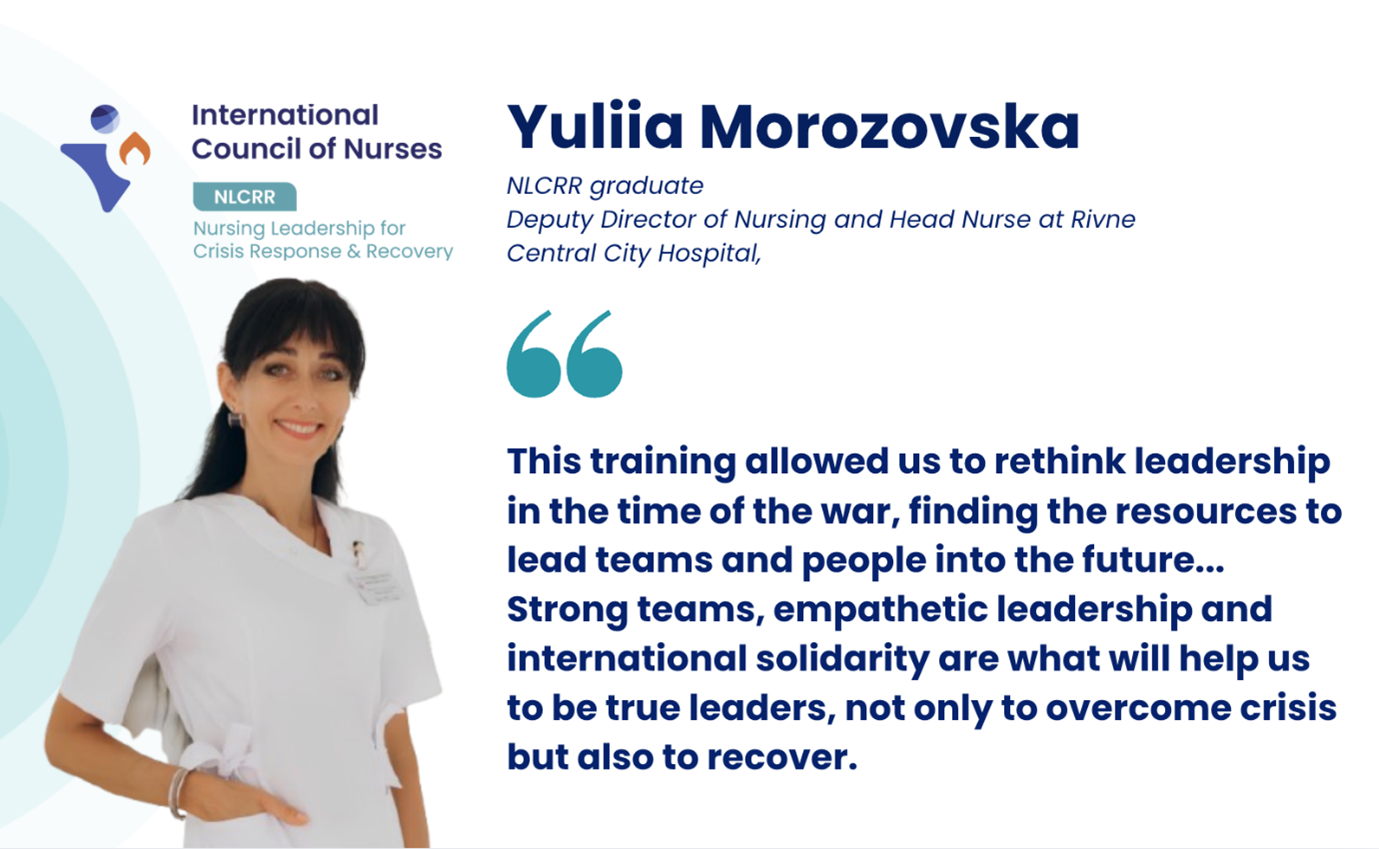
Yuliia Morozovska, Deputy Director of Nursing and Head Nurse at Rivne Central City Hospital, represented the West Region, and discussed how the programme supported building essential leadership capabilities for crisis management:
“This training allowed us to rethink leadership in the time of the war, finding the resources to lead teams and people into the future.
It created a space where Ukrainian nurse leaders, educators, clinical practitioners could come together, sharing a common nursing language, bringing different perspectives on the crisis. Strong teams, empathetic leadership and international solidarity are what will help us to be true leaders, not only to overcome crisis but also to recover.”
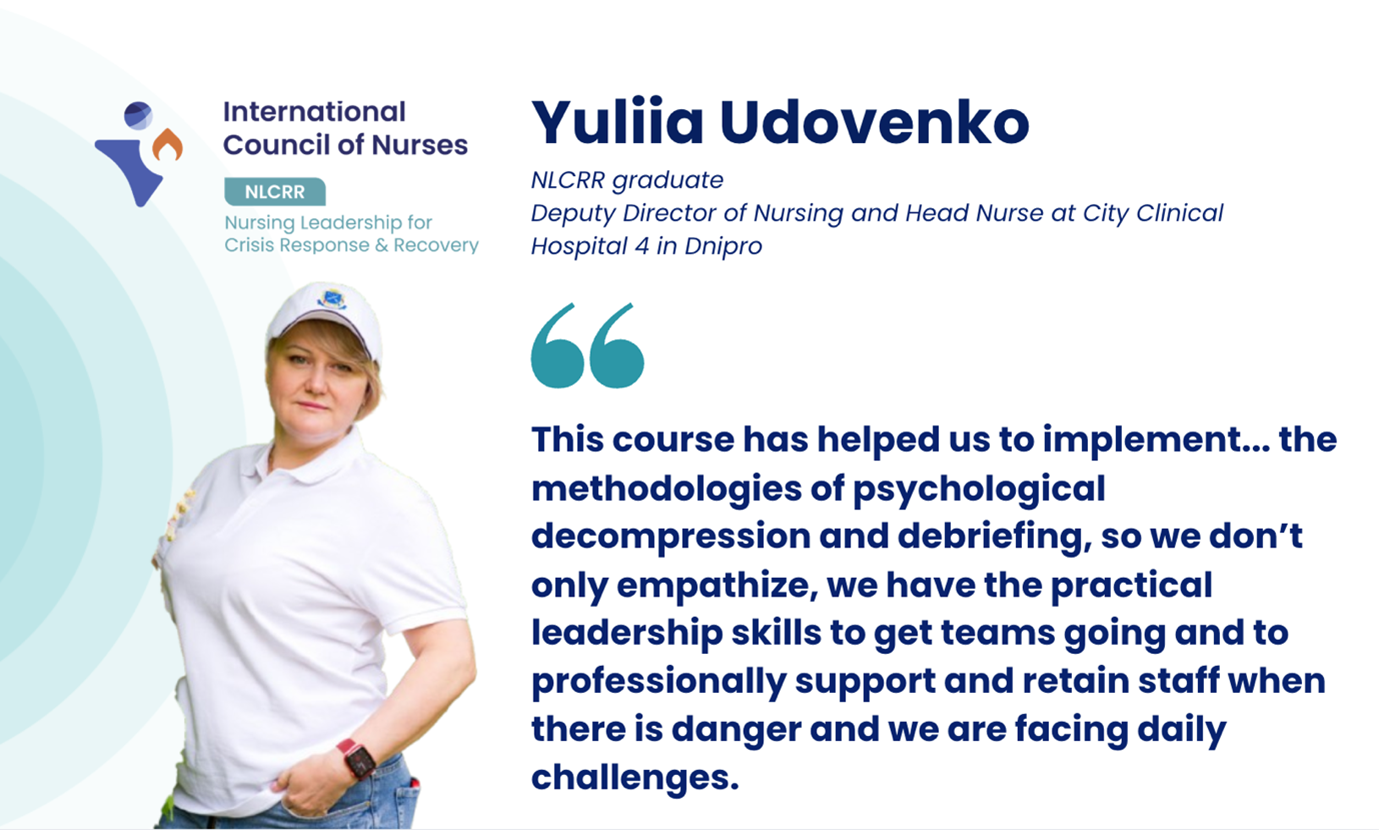
Yuliia Udovenko, Deputy Director of Nursing and Head Nurse at City Clinical Hospital 4 in Dnipro, represented the South-East region and described concrete achievements from the course in improving human resources logistics, with a mobile action algorithm that can be used for staff substitutions and enable leadership roles in mass casualty events, as well as protocols for horizontal decision-making to improve handling of critical situations when huge number of casualties arrive at hospitals.
She also emphasized the NLCRR programme's impact on leadership and advocacy to protect nurses’ wellbeing and maintain healthcare workforce stability:
“Professional burnout is a threat to national security… This course has helped us to implement into the daily practice of leaders the methodologies of psychological decompression and debriefing, so we don’t only empathize, we have the practical leadership skills to get teams going, to professionally support and retain staff, when there is danger and we are facing daily challenges. This training has helped us to develop nursing as the example and benchmark of resilience in Ukraine.”
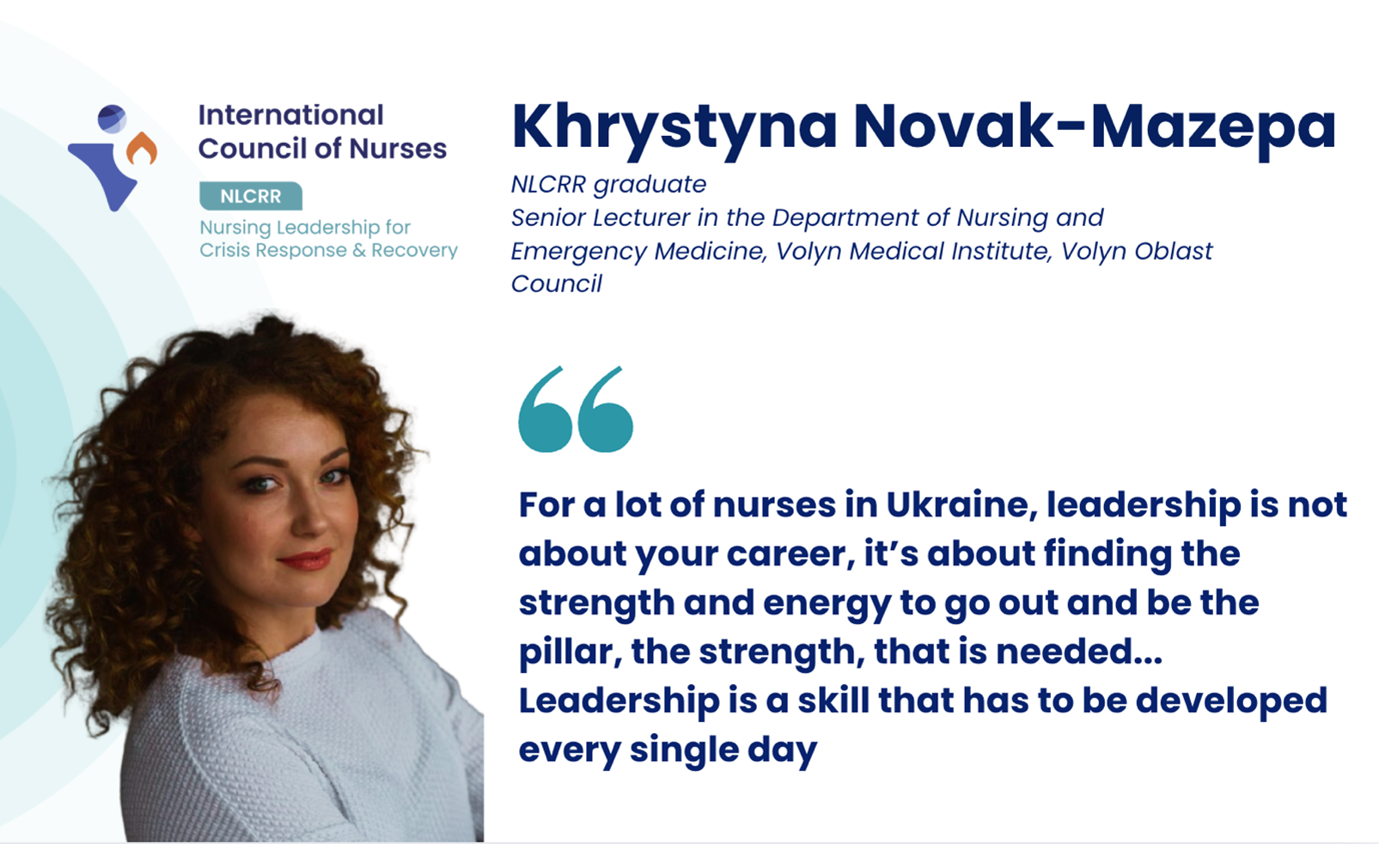
Khrystyna Novak-Mazepa, Senior Lecturer in the Department of Nursing and Emergency Medicine at the Volyn Medical Institute of the Volyn Oblast Council,
represented the West/North & East Region. She reflected on the vital importance of nurses leading health systems and communities.
“For a lot of nurses in Ukraine, leadership is not about your career, it’s about finding the strength and energy to go out and be the pillar, the strength, that is needed... Leadership is a skill that has to be developed every single day.”
She described how the NLCRR training supported the group’s project creating a nursing education programme for tuberculosis, where nurses are vital for long-term care, working with vulnerable populations. The training enabled integration of risk management, resource planning, work with stakeholders, ethical decision-making, and team coordination skills into the project.
Support from the Ministry of Health and WHO Partners
The graduates then heard from Kateryna Komar, Director for Center of Nursing Development at Ukraine's Ministry of Health, who expressed her gratitude to ICN and WHO partners for making the programme a reality. She emphasized its role in Ukraine's broader healthcare transformation strategy and the overwhelming response from the nursing community, commenting:
“We celebrate not only graduation today but resilience, leadership, and hope. This programme was born from our strong belief that Ukraine’s nurses deserve world-class leadership education, even in times of war... We had over 400 applicants from all regions of Ukraine—this was a powerful signal that Ukrainian nurses want to develop, they want to be leaders, they want to influence the system.”
Pavlina Guk, WHO Regional Office Representative, also congratulated the cohort and recognized their contributions to advancing health leadership in Ukraine.
“The path was not easy, but you have gained the necessary knowledge and practical experience which you can implement and share with your colleagues, the nursing community and future generations of nurse leaders. We encourage you not to stop here — continue to develop, to empower the nursing community... and share the experience and knowledge that you have and will continue to gain.”
NLCRR showed global nursing values in action
ICN CEO Howard Catton, who visited Kyiv during the in-person segment of the programme, delivered closing remarks.
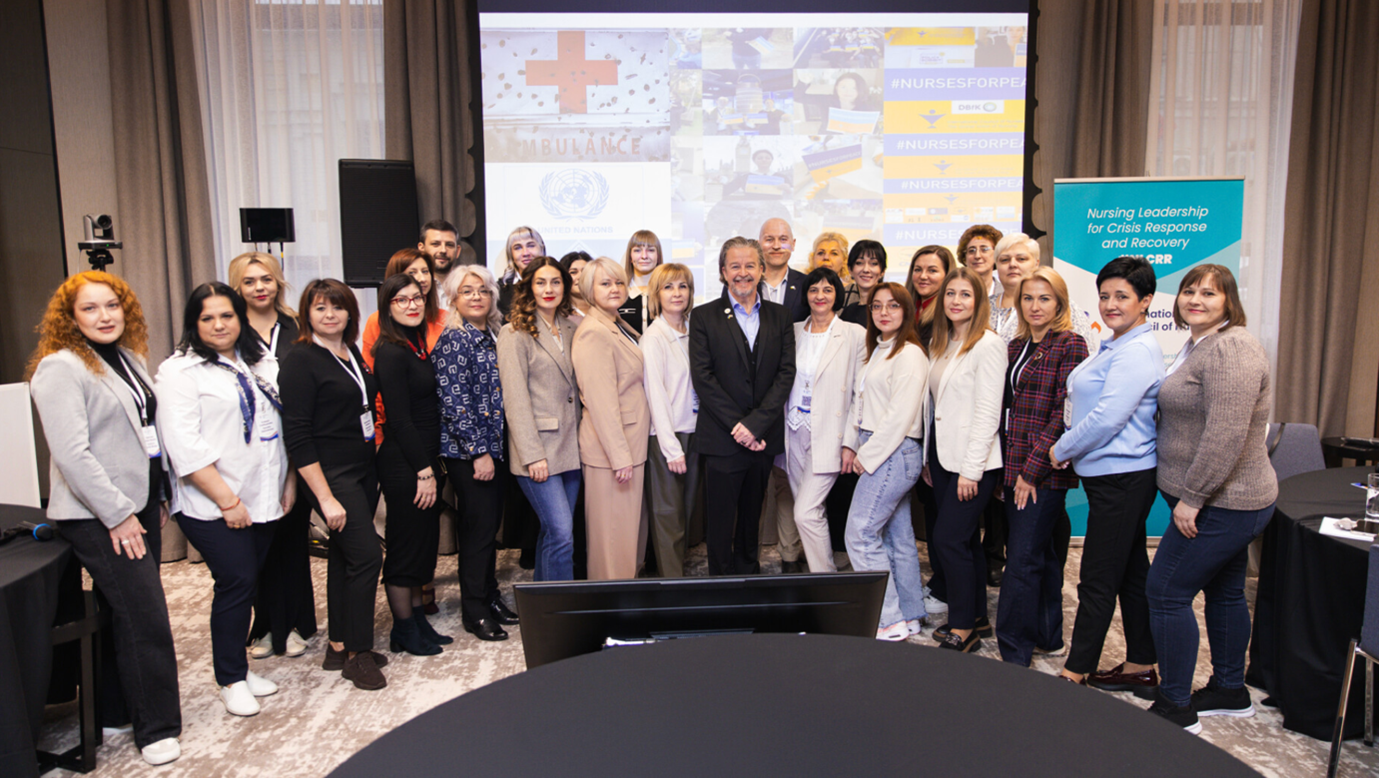
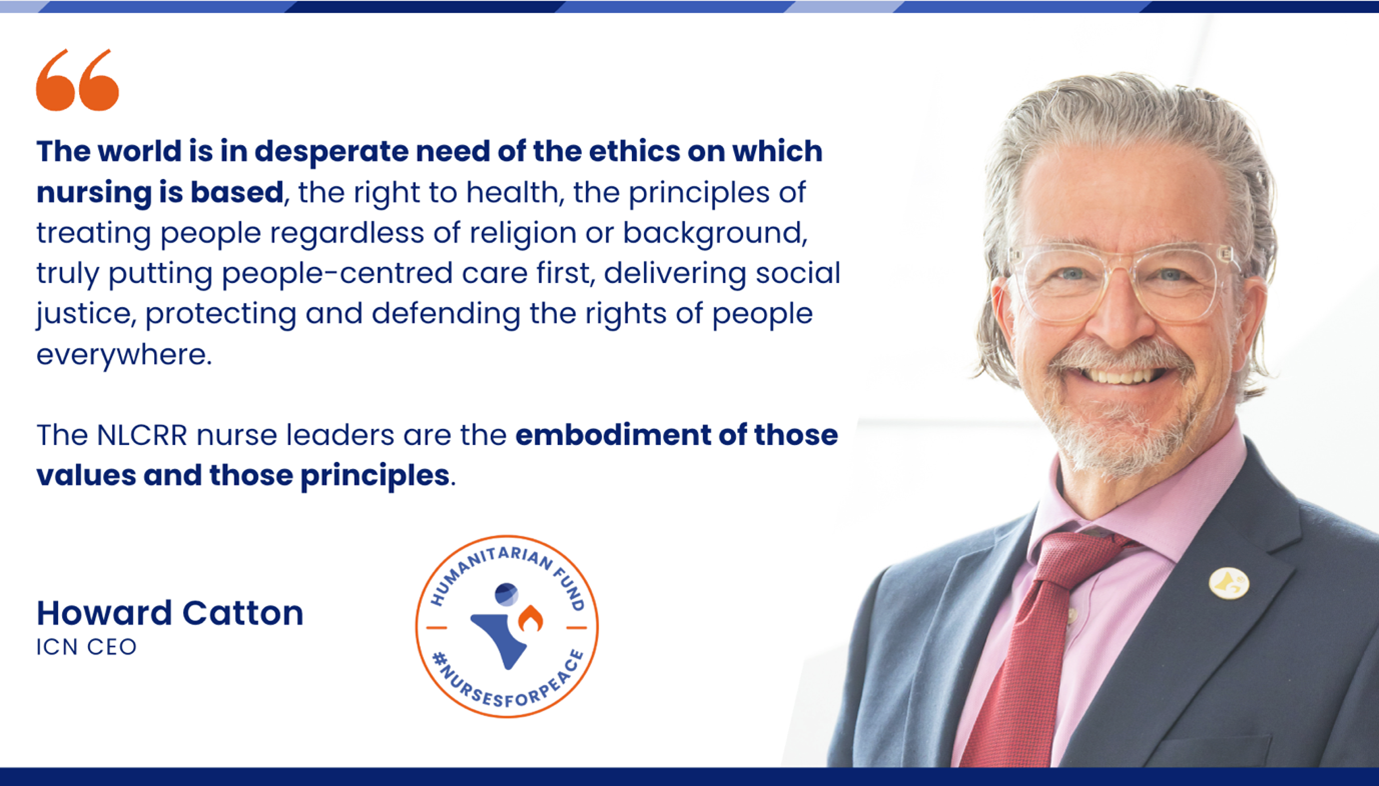
Mr Catton’s speech connected the achievements of the NLCRR programme and cohort with the wider mission of nursing amidst global challenges, saying:
“You are fabulous ambassadors for nursing in Ukraine, for your country, and exemplars and leaders of nursing excellence to all of us around the world.
This is a time when the world is making some huge choices, choices between aggression and peace, between spending money on military and defence and spending money on health as well.
We know that through the care that the nursing profession delivers, we're creating the conditions for peace. It's so important that that care is based on principles and ethics the ethics and the values of our profession that inform not only what we do but how we do it.
The world is in desperate need of the ethics on which nursing is based, the right to health, the principles of treating people regardless of religion or background, truly putting people-centred care first, delivering social justice, protecting and defending the rights of people everywhere as well. And you are the embodiment of those values and those principles.”
Building foundations for the future
This successful NLCRR programme represents a significant milestone in ICN's wider commitment to developing nurse leadership as well as peace and humanitarian work. ICN plans to deliver another NLCRR course in Ukraine, while continuing to support Ukrainian nurses and strengthen connections with health care leaders and organizations.
ICN also plans to adapt the NLCRR programme to other crisis and post-crisis settings globally.