

The Global Nursing Leadership Institute: a turning point for nurse leaders around the world
Like many nurses, Apsara Pandey’s story doesn’t begin in a boardroom or a policy meeting — it begins in the quiet, determined rhythm of more than 20 years at the bedside, where she first learned how the smallest decisions can shape a family’s future. Today, she stands at the centre of Nepal’s nursing leadership, representing 85,000 nurses as Vice President of the Nursing Association of Nepal, and founding president of the Paediatric Nurses Association of Nepal.
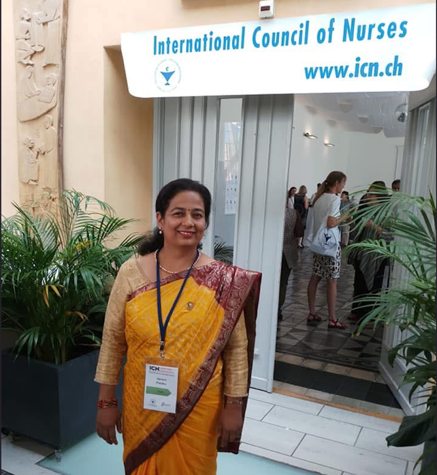
But it was the Global Nursing Leadership Institute (GNLI) that helped her to turn experience into influence, sharpening the political instincts she now uses to push for change that reaches every corner of Nepal. Since graduating from the programme, she has become a driving force behind major national initiatives that include launching Nursing Now Nepal, leading the EpiNurse project, and securing a stronger nursing presence inside the Department of Health. Her work has helped to shift national health policy, strengthen emergency response, and inspire a new generation of nurses to see themselves as leaders. As Apsara says, GNLI taught her how to craft messages that move policymakers and the public, and showed her how powerful nursing can be when it steps confidently into the political arena.
Empowering nurses to lead, influence, and transform
Empowering nurses to take a leadership role in policymaking is at the core of GNLI — a programme run by the International Council of Nurses (ICN) with a clear mission: to strengthen nursing leadership so nurses can shape the policies, systems, and decisions that determine the health of populations. This intensive, year-long policy programme has equipped hundreds of senior nurse scholars from nearly 80 countries with the political acumen required to shift health care policy. Long after the formal programme ends, GNLI alumni remain connected through a global network of nurse leaders who continue to mentor one another, collaborate across borders, share policy expertise, and open doors for future generations of nurses.
Since 2009, the Burdett Trust for Nursing (BTFN) has stood alongside ICN as a committed partner in advancing global nursing leadership through GNLI. Over more than a decade of grant‑making, the Trust has enabled approximately 300 nurses to participate in GNLI.
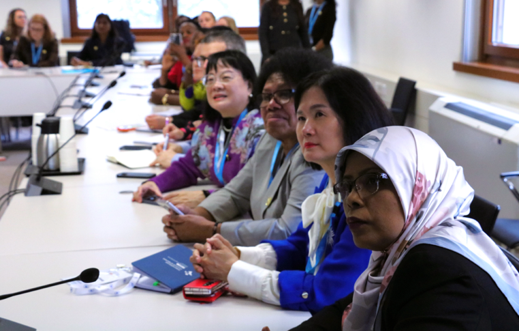
GNLI is part of the ICN Leadership Centre, which brings together a range of leadership development, policy training, and global networking opportunities to strengthen the influence of nurses worldwide. It is ICN’s flagship leadership programme — a place where senior nurses learn to navigate political systems, influence policy, and lead with clarity and courage. But participation in a programme of this calibre requires resources that many nurses simply do not have. The role of the Burdett Trust for Nursing has been transformative in quietly providing support and removing barriers, making it possible for nurses from every region to find and use their voice and step into a global leadership arena.
Together, ICN and BTFN have helped to build a global community of GNLI alumni who are now influencing ministries of health, leading national and global nursing strategies, shaping regulation, strengthening workforce policies, and driving system‑level reforms. At the centre of it all are the nurse leaders doing the work, taking the risks, and using their GNLI experience to strengthen the future of nursing leadership worldwide.
ICN provides the structure, the mentorship, and the global platform. The Trust provides the catalyst, the support that allows nurses to travel, learn, collaborate, and grow. The hard work, the breakthroughs, the policy wins, the leadership journeys that follow: those belong entirely to the remarkable nurse scholars themselves.
From GNLI Scholar to Chief Nurse
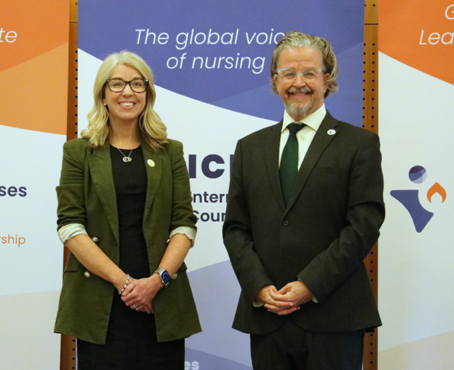
Emma Saddington began her GNLI journey in June 2025. Already a highly respected emergency and trauma nurse in Australia, Emma had built a reputation for tackling complex system challenges. As Senior Nursing Advisor at Safer Care Victoria, she helped co‑design the state’s first governance framework for restrictive practices and led the implementation planning for designated registered nurse prescribing. She was also a key contributor to Australia’s first National Nursing Workforce Strategy, bringing sharp system intelligence and practical insight to national policy discussions.
GNLI offered Emma something different: a chance to step beyond technical expertise and into the world of political leadership. She joined the 2025 cohort of 28 other nurse leaders from 27 countries, each bringing their own national challenges and ambitions. Module 1 pushed scholars to dig deep, analysing health and nursing data, mapping political landscapes, and shaping the early contours of a Regional Project that would grow in ambition as the programme unfolded.
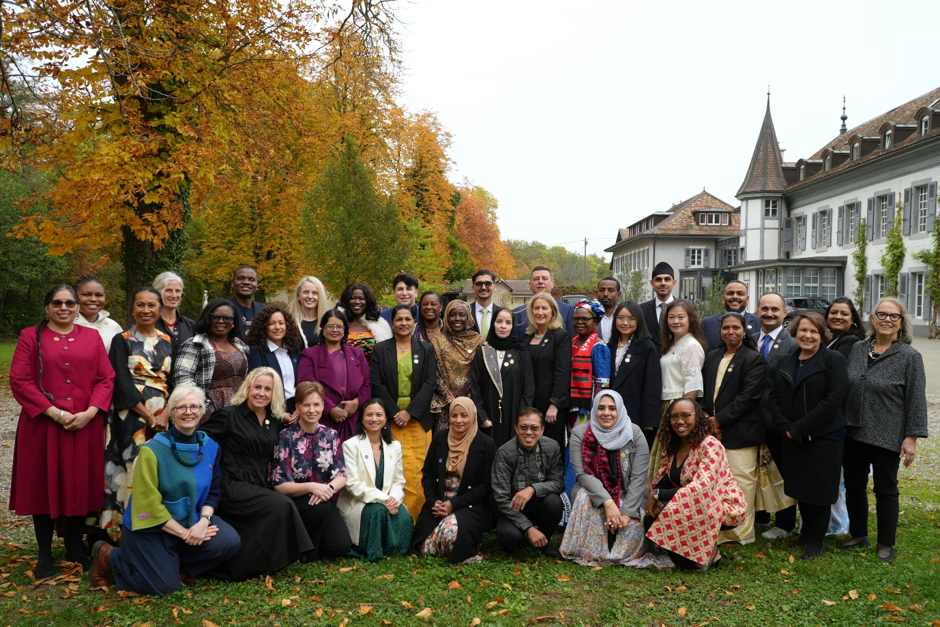
By October 2025, Emma was in Geneva for Module 2, a week that scholars often describe as transformative. Under the guidance of GNLI Directors Dr Diana J. Mason and Dr Patsy Yates, Emma immersed herself in high‑level policy leadership: understanding policy frameworks, navigating political contexts, crafting policy briefs, and learning how to frame messages that resonate with policymakers, media, and the public. The week was enriched by global leaders — including Dame Christine Beasley, Bruna Moreno Dias, Dr Pamela Cipriano, Clare Cable, and Holly Shaw — who provided tangible guidance on the realities of influencing health systems at scale.
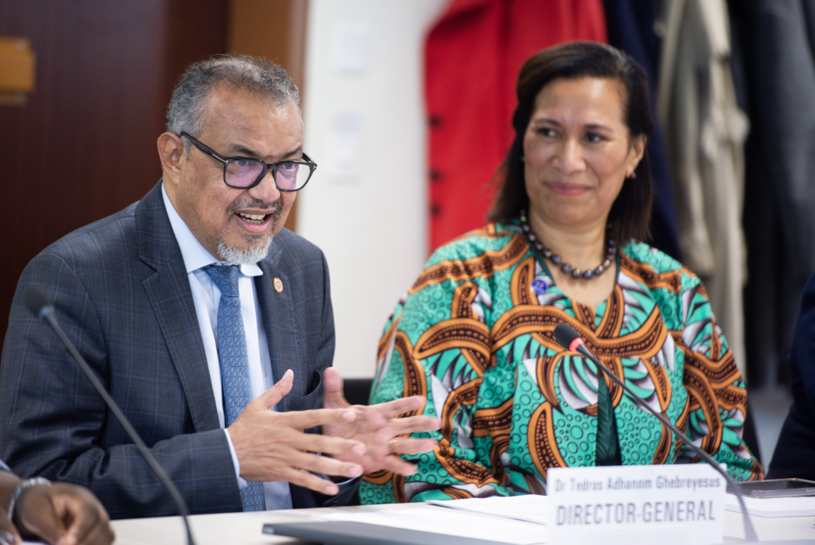
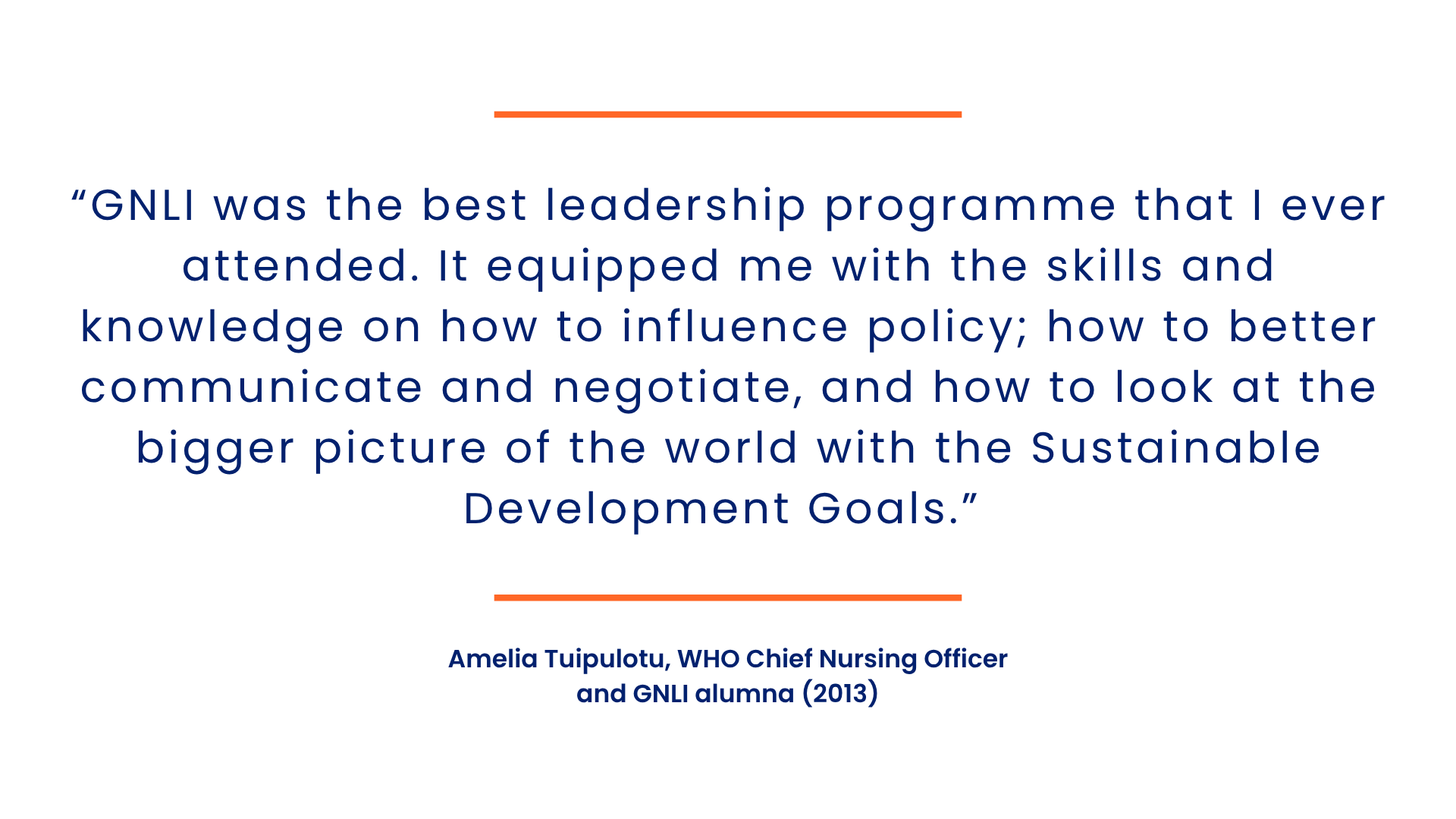
The cohort visited WHO headquarters, and meeting WHO Chief Nurse Officer Dr Amelia Tuipulotu, herself an alumna of the GNLI programme, gave Emma and her colleagues a powerful glimpse of what GNLI graduates can achieve. It was a reminder that nursing leadership can shape global health, not just respond to it.
Throughout the week, Emma and her regional colleagues — Lilian Yiew Sew Mee, Sam Goh Hongli, and I‑Wen Chang — refined their Regional Project, Closing the Leadership Gap: Why Nursing Leadership Capacity and Capability Matter in the Western Pacific Region (WPRO), which aimed to close the nursing leadership gap by developing and validating a Nursing Policy‑Political Leadership framework and survey tool. The project was ambitious, strategic, and deeply aligned with GNLI’s mission to turn insight into action.
Returning home, Emma carried the momentum from her time in Geneva with her. Module 3 connected her with in‑country mentors who helped her sharpen her individual development plan and advance both her regional and personal leadership projects.
Not long after completing GNLI, Emma’s career reached a defining milestone. In April 2026, she was appointed Chief Nurse Officer for the State of Victoria, one of the most influential nursing leadership roles in Australia. This is a role that demands the political acumen, strategic clarity, and the ability to lead at the highest level – all skills that Emma refined in her time at GNLI. She replaced former Victorian Chief Nurse and Midwifery Officer Karrie Long, also a GNLI alumna (2021) who is now the Co Chair of the National Nursing Workforce Strategy in Australia.
Emma credits GNLI with helping her step into that space. As she says, “The GNLI family gave me the confidence to go forth and be brave.”
Leading global nursing
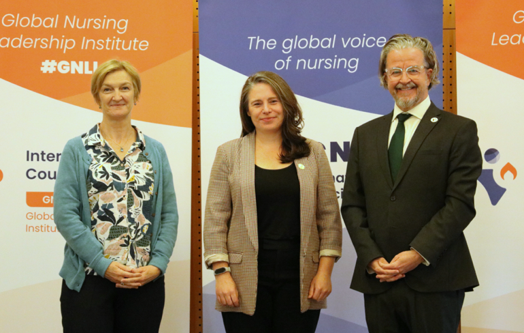
Emma is not the only nurse to be transformed by GNLI. Alongside Dr Amelia Tuipulotu at WHO, a growing cohort of alumni are stepping into major global roles. Vicky Treacy‑Wong, a GNLI 2025 alumna is now Chief Nurse Officer of Médecins Sans Frontières; Semakalong Phafoli, a 2018 GNLI scholar from Lesotho, was enlisted to lead the AFRO region for the State of the World’s Nursing report; and GNLI 2021 scholar, Brittney van der Water, from the USA, is the first nurse appointed to the editorial board of the open-access, peer-reviewed flagship journal BMC Global and Public Health.
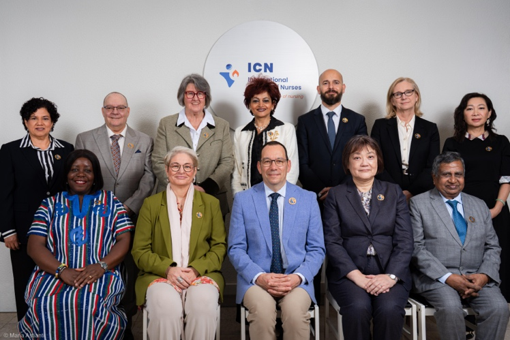
Their influence is echoed across ICN’s Board, where GNLI alumni have become a driving force. GNLI alumni Dr Karen Bjoro (2016), Prof. Dr Lian Hua Hung (2009), Perpetual Ofori‑Ampofo (2024), Dr Myrna Abi Abdallah Doumit (2021), Dr Ching‑Min Chen (2014), and Dr Nanthaphan Chinlumprasert (2012) have all served on the ICN Board, bringing GNLI’s policy‑driven approach directly into global governance. Together, they show how GNLI is not only developing individual leaders but reshaping the leadership landscape of international nursing.
GNLI Alumni transforming national nursing landscapes
Across countries and health systems, GNLI alumni are reshaping the future of nursing in ways that have real impact in their own countries. As Deputy Chief Nursing Officer for NHS England, Charlotte McArdle (GNLI 2017) helped anchor nursing firmly within national conversations on the social determinants of health, working alongside Sir Michael Marmot to ensure nurses are recognized as essential drivers of community well-being.
In Tasmania, Catherine Schofield (GNLI 2019) now leads statewide mental health nursing services, bringing GNLI‑strengthened strategic insight to some of Australia’s most complex care environments. Rwanda’s Umuziga M. Providence (GNLI 2023) has sparked a major leap in professional development by guiding the creation of a prototype curriculum for the National Council of Nurses and Midwives — a foundational shift for the country’s nursing education system.
In India, Sarvjeet Kaur (GNLI 2019) is steering national nursing standards as Secretary of the Indian Nursing Council, elevating the profession’s voice inside federal decision‑making and strengthening governance across the country. Canada’s oncology nurses are feeling the impact of Lorelei Newton (GNLI 2022), whose leadership has expanded national advocacy structures and sharpened the profession’s influence on cancer‑care policy. In the Philippines, Mila Delia M. Lanes (GNLI 2013) transformed the Philippine Nurses Association by launching the Nursing Leadership Institute and helping establish a Chief Nurse Office — achievements that earned the PNA national recognition as an Outstanding Professional Organization.
And in the UK, Professor John Unsworth (GNLI 2020), Chair of the Queen’s Nursing Institute, continues to champion community‑centred leadership — honoured with an OBE and inducted as a Fellow of the American Academy of Nursing for his contributions to workforce development and community nursing.
Together, these stories show how GNLI alumni are reshaping national nursing agendas, strengthening health systems, and redefining what political and policy leadership in nursing looks like.
GNLI alumni rebuilding systems and hope
As powerful as these national reforms are, the impact of GNLI stretches far beyond ministries and national councils. In some of the world’s most fragile settings, alumni are using the same leadership skills to protect communities, rebuild systems, and bring nursing voices into crises where every decision carries life‑changing weight.
Mowafag Hassan Hashim, President of the Sudan Nurses Organization, a 2014 GNLI graduate, has become a powerful voice for nurses working under extraordinary pressure in Sudan.
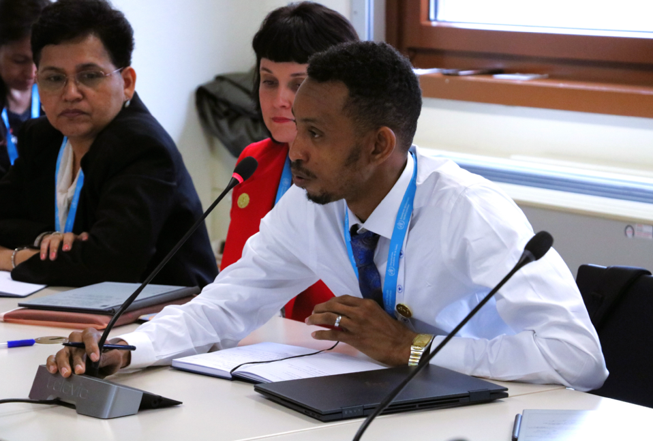
After completing GNLI, he emerged as a national and international advocate, speaking out for nurses who continue saving lives amid conflict, hospital attacks, shortages of medical supplies, and threats to their own safety. In 2023, he led Sudan’s successful membership to ICN, bringing the country’s nurses into the global nursing family and ensuring their struggles and courage were recognized on the world stage. He has repeatedly called on the international community to support ceasefire efforts, urging nurses worldwide to stand in solidarity with their Sudanese colleagues and amplify their petition to the UN Security Council. His leadership reflects the spirit of GNLI: a commitment to political courage, collective action, and the belief that even in the harshest circumstances, nursing leadership can shape a more humane future.
Yousef Al‑Shaabi, a 2023 GNLI scholar, is taking on the challenge of emergency and disaster nursing in Yemen, a country where conflict and crisis make skilled emergency care not just important, but lifesaving. During and after the programme, he channelled his leadership training into a landmark achievement: establishing Yemen’s first master’s degree in emergency and disaster nursing — a programme designed to build a cadre of highly trained nurses capable of responding to mass‑casualty events, displacement, and chronic humanitarian emergencies. This new academic pathway has already welcomed its first cohort of 53 trainees, marking a historic investment in Yemen’s nursing workforce and a bold step toward building national resilience. Yousef’s work reflects the core spirit of GNLI: using strategic leadership to transform systems, elevate nursing expertise, and create opportunities that would not otherwise exist. In a country facing immense challenges, his efforts are helping shape a new generation of emergency‑care leaders who will strengthen health services for years to come.
The power of partnership
These stories show a range of impacts, from chief nurses shaping global policy to national leaders transforming their professional associations. They are stories of GNLI scholars and alumni stepping into the spaces where nursing leadership is most needed and most consequential. Many of these journeys would not be possible without the Burdett Trust for Nursing, which has helped to ensure that financial barriers never limit who can access GNLI and has opened doors for leaders who now influence ministries, global organizations, national nursing agendas and make an impact in their communities.
With hundreds of alumni now occupying positions as government ministers, health directors, and clinical pioneers, the legacy of GNLI is written every single day in policies that protect communities, elevate the nursing workforce, and ensure health equity for all.
The story of GNLI is ultimately a story of a programme that supports nurses in finding their voice — and using it to reshape the policy landscape of health systems around the world. What begins as a week of intensive leadership development becomes, for many, a turning point: a moment when political understanding deepens, confidence sharpens, and the ability to influence legislation, strategy, and practice becomes unmistakably clear. GNLI alumni are now speaking for nursing in ministerial offices, regulatory councils, parliaments, and global forums, bringing frontline insight into the rooms where decisions are made. Their impact is visible in new laws, strengthened standards, modernized curricula, and national reforms that protect communities and elevate the profession. The long‑standing commitment of the Burdett Trust for Nursing has helped ensure that talented leaders can access GNLI regardless of financial barriers. Together, ICN and BTFN have helped build a global ecosystem of nurse leaders who are not only shaping policy, but redefining nursing leadership for the future.